Beyond the Dial: The Thrill, Craft, and Global World of Amateur Radio
Long before smartphone screens lit up our faces and undersea fiber cables routed internet traffic around the globe in milliseconds, human beings were quietly chatting across oceans using nothing more than invisible electromagnetic waves, custom electronics, and wire stretched between backyard trees.
Welcome to the world of amateur radio—or "ham radio." If your mental picture is an isolated operator tapping out Morse code in a dusty basement, prepare for a surprise. Modern amateur radio is a high-tech, addictive, and incredibly diverse subculture. Uniting people aged 16 to 80+ across every walk of life—from high school students and software developers to outdoor hikers and aerospace engineers—ham radio is equal parts experimental electronics lab, international community, and competitive radiosport.
The best part? Getting your license is straightforward, affordable, and opens up a playground where every band offers a new adventure.
1. Sparks, Spinning Steel, and Early Pioneers
Amateur radio rests on a rich century of physics and ingenuity. In the late 1880s, Heinrich Hertz verified James Clerk Maxwell’s mathematical equations by generating electrical spark gaps in his lab, proving that invisible electromagnetic waves could travel through air. By 1901, Guglielmo Marconi bridged the Atlantic, launching an era of commercial wireless telegraphy.
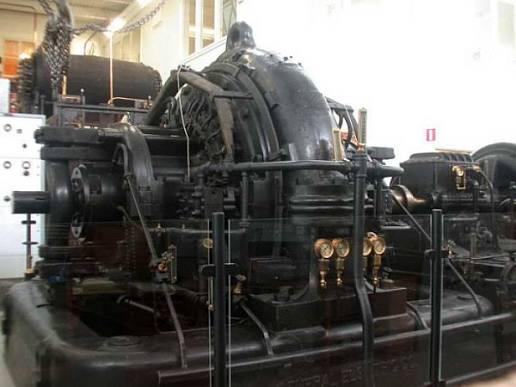
Early transmitters were massive, mechanical powerhouses. A famous surviving relic is Sweden's Grimeton Radio Station (SAQ)—a UNESCO World Heritage site featuring a 1920s Alexanderson alternator. This massive spinning machine functions like a high-frequency power generator, outputting a pure VLF signal on 17.2 kHz.
When early governments stepped in to allocate radio frequencies, they claimed the "valuable" low frequencies for shipping and military use, exiling amateur experimenters to the shortwave spectrum—anything "above 200 meters." Instead of giving up, hams built their own tube gear and made a breakthrough: high-frequency (HF) signals did not die out over the horizon. Instead, they bounced off ionized layers in the upper atmosphere like mirrors, allowing low-power amateur signals to skip around the globe.
2. The Engine Room: How Signals Travel
Amateur radio is an open playground of modulation modes. You do not need an engineering degree to understand them—think of them like different vehicles on a highway:

- Continuous Wave (CW / Morse Code): The moped of radio. By pulsing a raw carrier wave on and off with a hand key, CW uses almost no frequency bandwidth (under 200 Hz) and easily weaves through thick atmospheric noise where voice fails.
- AM & Single Sideband (SSB): Early voice transmissions used Amplitude Modulation (AM), which acts like a heavy semi-truck carrying a big, power-hungry signal. In the mid-20th century, radio amateurs helped pioneer Single Sideband (SSB). By stripping away the carrier wave and unneeded sideband, SSB acts like a lightweight sports car, concentrating all transmitter power into a sharp, fuel-efficient voice signal.
- Slow-Scan Television (SSTV): Hams also transmit photos. SSTV converts picture files into whistling audio tones, drawing images line-by-line across screens worldwide or straight down from the International Space Station (ISS).
- Digital Weak-Signal (FT8): The autonomous electric hypercar. Developed by astrophysicist and Nobel laureate Joe Taylor (K1JT), FT8 uses computer clock synchronization and math algorithms to pull digital data out of deep noise—even when signals are 20 decibels below human hearing.
3. The Spectrum & Extreme Radio
Operating distances depend entirely on which frequency lane you choose:
| Band Class | Spectrum Range | Real-World Operating Style |
|---|---|---|
| HF (High Frequency) | 3 MHz – 30 MHz | Shortwave Bouncing: Signals refract off the atmosphere, enabling global DXing (long-distance contacts) tied to 11-year solar sunspot cycles. |
| VHF (Very High Frequency) | 30 MHz – 300 MHz | Local & Atmospheric: Line-of-sight communication with rare phenomena like Meteor Scatter (bouncing signals off ionized trails of falling meteors). |
| UHF & Microwaves | 300 MHz – 3 GHz+ | Focused Beams: Highly directional signals used for dish antennas, high-bandwidth data, and space relays. |
Moonbounce (Earth-Moon-Earth)
Often called EME, Moonbounce represents one of the most impressive feats in amateur radio. Operators align high-gain antenna arrays directly at the Moon, using it as a passive reflector to bounce VHF, UHF, or microwave signals across a 480,000-mile round trip. Hearing your own echo return from the lunar surface requires precise tracking hardware and sensitive digital receivers.
Orbiting Satellites
Radio amateurs do not just bounce signals off the Moon; they build and launch their own hardware. Since OSCAR 1 in 1961, hams have placed dozens of non-governmental satellites into orbit. Equipped with an entry-level handheld radio and a small hand-held directional antenna, anyone can track low-Earth orbit satellites passing overhead or talk directly to licensed astronaut operators aboard the ISS.
4. Global Flavors: North America, Europe, and Asia
Amateur radio culture takes on distinct, fascinating characteristics depending on where you look around the globe:
North America: The Club & Field Day Culture
In North America, the hobby thrives on community clubs and outdoor readiness. Every June, tens of thousands of operators participate in ARRL Field Day. Clubs head into public parks, setup generator-powered tents, string wire antennas through trees, and operate for 24 hours straight to test emergency preparedness while sharing food and gear tips.
Europe: Engineering & Technical Innovation
European ham culture—with a strong presence in countries like Germany—places a deep emphasis on homebrewing, hardware design, and digital signal processing. German clubs like the DARC host major technical gatherings like Ham Radio Friedrichshafen, where enthusiasts gather to showcase self-built software-defined radios (SDRs), custom microwave filters, and open-source protocol designs.
Asia: High-Speed Radiosport & DX Excellence
In Asia, particularly in Japan (which boasts one of the highest concentrations of licensed operators in the world), the culture leans heavily into fast-paced contesting and DXing. Asian operators are famous for building compact, high-efficiency urban antenna arrays and demonstrating extreme discipline during competitive Pileups.
5. Niche Adventures: POTA, SOTA, and Contesting
Whether you prefer outdoor hiking or high-octane competition, there is a specialized style of operating tailored to you:
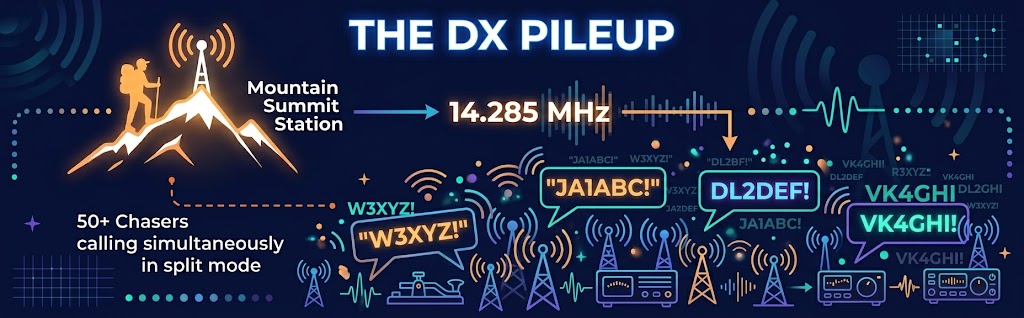
- Parks on the Air (POTA) & Summits on the Air (SOTA): Operators pack ultra-lightweight HF radios, lithium battery packs, and portable wire antennas into a backpack, hike up mountain peaks or state parks, and "activate" the location. Hundreds of "chasers" worldwide monitor frequency spots to work the activator, turning a scenic hike into a fast-paced radio event.
- Radiosport & Contesting: During major global events like the CQ World Wide DX Contest, operators compete to make as many verified international contacts as possible within 24 to 48 hours. Success requires real-time solar tracking, quick reflexes, and sharp audio filtering to pick individual callsigns out of a wall of incoming signals.
- Foxhunting (Radio Direction Finding): Competitors head into forests or city parks equipped with directional antennas and signal attenuators, searching out low-power transmitters hidden in the brush.
6. How to Get On the Air
If you think joining the hobby requires an engineering degree or memorizing Morse code, think again—Morse code testing was retired globally years ago!
Getting your entry-level license involves a straightforward multiple-choice exam covering basic safety, common-sense operating rules, and introductory radio concepts. Studying takes just a few evenings using free online practice tools and study guides.
In the Netherlands, licensing and spectrum registration are handled by the Rijksinspectie Digitale Infrastructuur (RDI). You can learn all about taking your N- or F-license exam by visiting the official guide on RDI: Hoe word ik zendamateur.
With an entry-level license and an affordable handheld radio or portable field rig, you immediately gain access to local repeaters, orbiting satellites, and global shortwave bands. You set up your gear, send your callsign out into the ether, and experience the timeless thrill of hearing a human voice answer back from across the world.
Epilogue: Thank You for Reading
Thank you for taking the time to journey through the vast and fascinating spectrum of amateur radio. Whether you are a lifelong tech enthusiast, an outdoor adventurer looking for a new twist on your trail hikes, or simply curious about how humans connect across invisible airwaves, we hope this overview gave you a fresh appreciation for the hobby. The radio spectrum is a shared global treasure, and there is always room on the bands for one more voice. We hope to hear you on the airwaves soon—73!